Poker Training – Is It Relevant For All Varieties? (Including Video Poker)
It makes sense that people who take up poker want to get as good as they can be. But poker has always been one of those games that sits somewhere between structure and unpredictability. The basic rules can often be learned quite quickly. Deeper layers take much longer to understand.
All of this is part of the reason poker training has become such a huge topic over the years. Some players study hand rankings and probabilities to try to do their very best. The interesting thing is that not all poker games ask for the same type of preparation. The varieties of poker add to a more varied landscape.

Training for poker is not one-size-fits-all. Different varieties place emphasis on different skills – some styles remove certain elements entirely. Video poker changes the experience in a major way by removing the social side of the game.
That difference changes the way people approach learning the game.
Video Poker And A Different Kind Of Training
Video poker sits in a slightly unusual place in the poker world. It is a tweak and an evolution of the game people know. It uses familiar poker hands and card combinations. The structure feels very different from traditional multiplayer formats. The player interacts directly with a machine or digital interface.
Many of the best online video poker games come complete with modern interfaces. There are also some variations in the ways the gameplay works. We see a lot of people embracing this way of playing – it sits somewhere between slots and traditional poker.
The gameplay means one of the biggest parts of classic poker training disappears completely: reading opponents. There are no facial expressions to interpret or shifts in betting patterns caused by nerves. The game is much more focused on individual decisions and understanding the mechanics.
That does not mean training becomes irrelevant. Many players spend a lot of time learning strategy charts and understanding which cards to hold or discard in different situations. The decisions happen super quickly – no waiting for others around the table.
Video poker training often leans heavily into repetition and pattern recognition. Players can practice repeatedly in short sessions. Another interesting thing about video poker is accessibility. People don’t need to find others to play with. They can practice almost anywhere using mobile devices. This ease of access has helped make training more common than it once was. People compare the simplicity of video poker to blackjack and even slots. The level of risk is the main decision in many other games around the casino.
Texas Hold’em And The Human Element
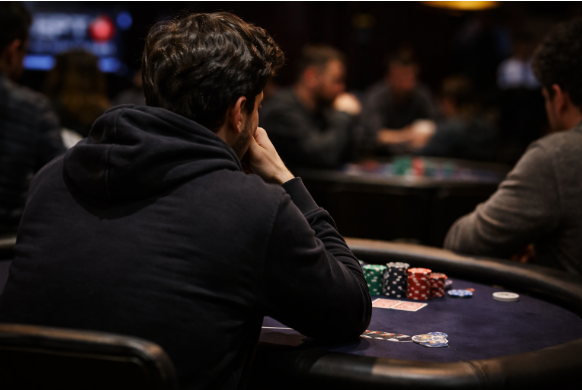
Texas Hold’em is the best-known poker variation in the world. It highlights how different poker training can become once people are involved. Hold’em revolves around interaction as much as the cards themselves.
Players are not simply thinking about probabilities and hand strength. They are also watching how others behave. Things like unusual confidence can all shape how a hand unfolds and give hints on a player’s intentions. Spotting tells becomes a big part of the game.
Training for Hold’em tends to involve multiple areas at once. Strategy still matters. Understanding position and timing remains important. Yet many players also spend time studying behavior and table dynamics.
This social aspect is one reason Hold’em remains so popular. No two games feel exactly the same because the personalities around the table constantly change the atmosphere. We’ve seen the story that can be told through poker appealing to people. It has even proven itself as a theme used in film and media.
Online Hold’em has changed the learning process slightly as well. Players often focus more on betting patterns and decision speed…there isn’t the face-to-face element. The human factor remains present because every opponent still brings different habits and tendencies into the game.
Omaha And More Complex Decision-Making
Omaha takes many of the ideas from Hold’em and increases the complexity. Players receive more cards. This naturally creates a much wider range of possible hand combinations. This means training often becomes more detailed and analytical.
Players need to think carefully about combinations and future outcomes. A strong-looking hand early on may become vulnerable very quickly. This creates a style of play where patience and awareness matter a great deal.
Training for Omaha often involves studying hand structures and understanding how quickly situations can change.
The human side still plays a role here. Reading the table and adjusting to different personalities remains important. It is fair to say that the strategic calculations become heavier than in some other forms of poker.
Can Training Really Apply To Every Variety?
Training is relevant across almost all poker formats. The type of training changes depending on the game. Video poker focuses more on mechanics and probability. Hold’em combines strategy with human psychology. Omaha pushes players toward deeper analysis and adaptability.
Some core ideas carry across all versions. Familiarity with hand rankings and game flow also transfers naturally between formats. Yet each variation has its own identity, and training tends to reflect that.
What remains consistent across every variation is the appeal of improvement. Poker often rewards thought and adaptation. This naturally encourages people to study and refine their approach. Whether the game involves a digital screen or a crowded table…
-
Comfort
-
Tournament Structures
-
Personnel