David Sklansky Taught a Generation How to Think. His Legacy Is More Complicated Than That
David Sklansky changed poker by changing the way players think. Before his ideas became popular, many players mostly wanted simple answers, they were situational rather than strategic, similar to “What should I do with this hand right now?”
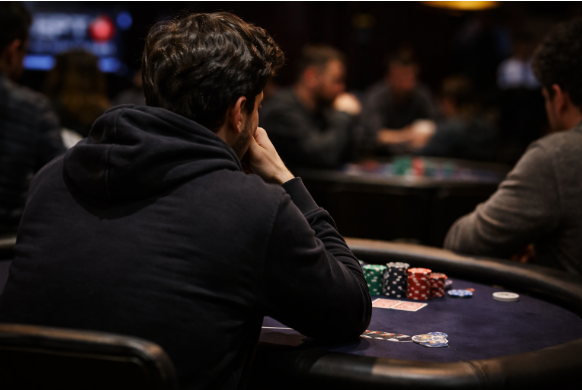
His famous book, The Theory of Poker, teaches big ideas that can be valuable in different variations of a poker game. These include:
· tricking other players,
· why your seat matters,
· how people think,
· how future bets can matter,
· and one very important rule called the Fundamental Theorem of Poker.
That is a big reason people still talk about his work today. He was not just teaching one move or one hand. He was teaching people how to understand the game itself, and obtain valuable skills. And that matters even more now, because poker has changed a lot over time, while educating those who enter into gaming without a prior knowledge and experience is still a priority:
https://www.instagram.com/p/DWCnUBSjOB1/
When the table stopped looking the same
To some modern readers, parts of Sklansky’s teaching can feel dated on the surface. That is not because the core ideas lost value. It is because the setting around them changed. Much of the older poker world moved at a slower speed. Players often built edges through patience, close observation, table image, and a feel for how a session was unfolding over hours, not minutes. Information was scarcer. Strategy spread more slowly. A good book could shape a player’s entire way of seeing the game for years.
It perhaps almost always included money as an element of the game but Texas Hold’em – the most popular version of poker, once carried a very clear picture for many players: a live room, a weekly game, a long session, and a smaller circle of regulars. In that setting, Sklansky’s writing felt like a clean intellectual upgrade. It gave structure to instincts that many players had only half understood. It named ideas that serious players could study, test, and improve.
Online play changed the texture of the game
In the era of online casino sites, playing Texas Hold’em for real cash often means something broader and faster. The game is available across more formats, more hours, and more devices. Players can move between poker as competition, entertainment, and poker as part of a bigger gaming routine, without leaving the same screen. That changes the texture of play. It also changes what feels modern.
Yet this is exactly why Sklansky still matters. His deeper lesson was never just about fixed plays from an older era. It was about judging a decision by the information available, the likely range of responses, and the long-term value of the wager. The examples may belong to an earlier stage of the game, but the mental habit remains alive. His work can seem old only if it is read as a list of answers. Read as a method, it still speaks clearly.
The market around the game grew wider
The biggest sign of change is that poker is no longer just a small part of gaming culture. Now it is part of a much bigger world of digital entertainment.
In Europe, online gambling made up 39% of all gambling money in 2024, up from 37% in 2023. Phones and other mobile devices made up 58% of that online money. In the United States, commercial gaming made a record $71.92 billion in 2024, and online gaming brought in $21.54 billion, which was about 30% of the total.
| Measure | Latest figure | What it shows |
| Europe total gambling revenue, 2024 | €123.4 billion | The overall market is large enough that digital habits now shape the whole sector |
| Europe online share, 2024 | 39% | Online play is no longer a side channel |
| Europe mobile share of online revenue, 2024 | 58% | The game increasingly lives on the phone, not just at the table |
| U.S. commercial gaming revenue, 2024 | $71.92 billion | The wider gaming economy keeps expanding |
| U.S. online gaming revenue, 2024 | $21.54 billion | Digital play now carries a major share of industry activity |
| U.S. iGaming revenue, 2024 | $8.41 billion | Online casino play has become a strong growth engine |
From poker advice to a wider way of thinking

What lasts most from Sklansky is not a set of moves but a style of thought. That is why his influence travels beyond the poker table. The Atlantic once called poker “a perfect microcosm of many situations we encounter in the real world.” That line gets at the larger point. Poker matters because it makes uncertainty visible. You act without full information, weigh pressure against price, and live with the fact that a sound choice can still lose. Sklansky helped make that logic readable to ordinary players, and that may be his most durable contribution.
Returning to the same lesson
A later generation picked up that same idea in a different language. Writing in The Guardian, Maria Konnikova said, “Poker has given me many things. Better decision making abilities. A better understanding of probabilistic thinking, the nature of chance, the nature of incomplete information.” That is very close to the world Sklansky opened up, even if the setting is newer and the tone is more contemporary.
It also helps explain why poker stayed important to researchers. In 2019, Science published work on an AI system that was stronger than top human professionals in six-player poker, showing that the game had become a major test case for strategic reasoning under hidden information. Sklansky did not create that future, but he did help teach players, and later readers, why poker was worth thinking about so seriously in the first place.
Why his core insight still holds
Sklansky’s legacy is not only that he taught people how to win more hands. It is that he taught them what kind of game poker really is. The table changed, the screen got bigger, and the pace got faster, but that insight still holds.
-
Comfort
-
Tournament Structures
-
Personnel


