Poker Under the Gun: What It Means and How to Play
The first player to act before the flop faces a different challenge. Here’s what the under the gun position means and how it affects your poker decisions.
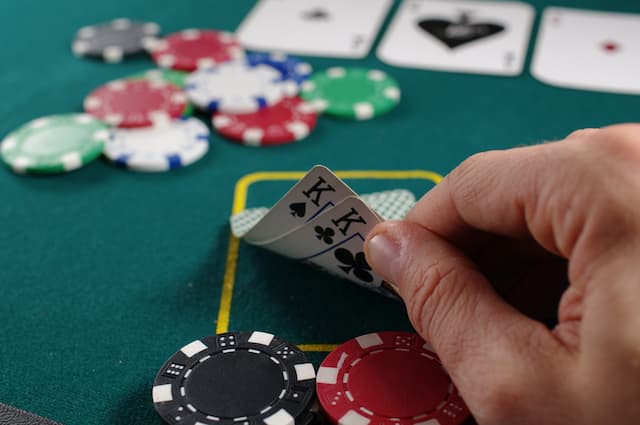
You look down at king-jack. Nobody has raised, but nobody has folded either. At a nine-handed table, eight opponents still get a turn. Several could hold a better hand, and anyone who raises will force you to make another decision. That’s the difficulty of playing poker under the gun. You must decide whether your cards deserve an investment before seeing what anyone else does.

What Does UTG Mean in Poker?
UTG stands for under the gun: the seat immediately left of the big blind in a standard Hold’em hand with at least three players and no straddle. That player acts first before the flop. The designation moves around the table as the dealer button advances.
UTG doesn’t mean you must bet. Your initial choices are to fold, call the big blind, or raise. You cannot check because the big blind has already established a wager you must match to continue.
Calling without raising is called limping. Raising as the first player entering the pot is an open-raise.
Where UTG Sits Among the Positions on a Poker Table
Start with the dealer button. Moving clockwise, the next two seats post the small blind and big blind. UTG comes next.
At a nine-handed table, the preflop order is:
- Under the gun
- UTG+1
- UTG+2
- Lojack
- Hijack
- Cutoff
- Button
- Small blind
- Big blind
Seat labels can vary, particularly around middle position. The important relationship stays the same: UTG begins preflop betting, while the button acts after the other non-blind seats.
What is big blind in poker? It means both the larger compulsory blind bet and the seat posting it. In a 1/2 game, the small blind normally posts $1 and the big blind $2. UTG must therefore call $2, raise, or fold.
The big blind isn’t guaranteed the final decision. If someone raises, players who acted earlier may get another turn.
Why Acting First Changes Your Hand Selection
Early position poker leaves more opponents with an opportunity to enter the pot. At a nine-handed table, UTG has eight players behind. On the button, an unopened pot has already passed six players who folded, leaving only the blinds.
Those folds are useful information. They remove opponents who might otherwise call or raise.
The disadvantage often continues after the flop. If you open UTG and the button calls, you act before the button on later betting rounds. Your opponent gets to see whether you check or bet before responding.
But UTG isn’t always first to act in poker after the flop. Postflop action begins with the first remaining player clockwise from the button. Against the big blind alone, UTG acts second. Confusing these two betting orders makes the seat seem worse than it actually is.
Which Hands Generally Belong in a UTG Range?
Under the gun isn’t the place to get adventurous with marginal hands. Too many players still have a chance to wake up with something better. Big pocket pairs and hands like ace-king are the obvious candidates, but there’s no single range that fits every table. A six-handed game leaves more room to raise than a full-ring table, for instance. Stack sizes matter, too, along with who’s waiting to act behind you.
Consider king-jack offsuit. If someone calls with ace-king or king-queen, flopping a king can leave you with top pair and the worse kicker. That’s an expensive kind of second-best hand because it looks strong enough to keep playing.
Suited cards help, but matching suits don’t make every hand good enough for an early-position raise. Nine-eight suited still needs to justify entering against several opponents with little information.
Avoid treating an opening chart as universal. Six-handed UTG faces five opponents rather than eight, so its range generally widens. A chart built for deep cash-game stacks also won’t answer every short-stack tournament decision.
Resources covering a poker position can help connect starting hands with stack sizes and the decisions that follow.
Raising, Facing a Reraise and Folding
For beginners, a raise-or-fold approach provides a cleaner starting point than routinely limping UTG. Calling the minimum lets opponents enter cheaply and can leave you navigating a crowded pot.
An opening raise doesn’t commit you to continue against every response. If another player re-raises (a three-bet), reconsider your hand against that opponent’s likely holdings and the price offered. Money already invested isn’t a reason to add more.
The same distinction applies online. BetUS Poker lists tournaments through its real money poker page, but the lobby doesn’t supply your strategy. Before registering anywhere, check the buy-in, blind structure, and rebuy rules. Those terms affect how much you risk and the stack situations you’ll face.
FAQs
What hands should I fold preflop?
Under the gun, hands like 7-2 offsuit are straight into the muck. King-jack offsuit isn’t much of a bargain at a full table, either. Small pairs and suited connectors? That depends on how deep the stacks are and who’s left to act.
What’s the best preflop hand in poker?
Nothing beats pocket aces preflop in Texas Hold’em. Once the community cards arrive, though, that advantage can disappear. A dangerous board or an opponent showing serious strength might be reason enough to slow down, even with AA.
Is folding losing in poker?
Folding gives up your claim to the current pot. It doesn’t necessarily mean you made a losing decision. If you fold UTG before investing voluntarily, you lose no additional chips. After raising, folding can still be cheaper than continuing against a stronger hand.
-
Comfort
-
Tournament Structures
-
Personnel