The Flow-State Fold: The Hidden Discipline Behind Poker’s Quietest Winners
In November 2025 the poker landscape hums with ideas around GTO, exploitative strategies, and solver-based studying. Yet the most underrated edge, which I call the flow-state fold, crawls under the radar of almost every semi-serious player. Many articles talk about aggression, table image, and meta-game, but almost none highlight when folding on instinct—in a rhythm-state—beats a marginal call.
The flow-state fold is that moment of minimal resistance, where your gut unites with pattern recognition and you ditch a hand before it drags you into awkward territory.
In This Article You’ll Learn:
- What exactly the flow-state fold is and why it works.
- The three hidden signals to spot it at your table.
- A 5-step drill to train it into your muscle memory.
- How to monetize it: turning fewer marginal plays into bigger profits.
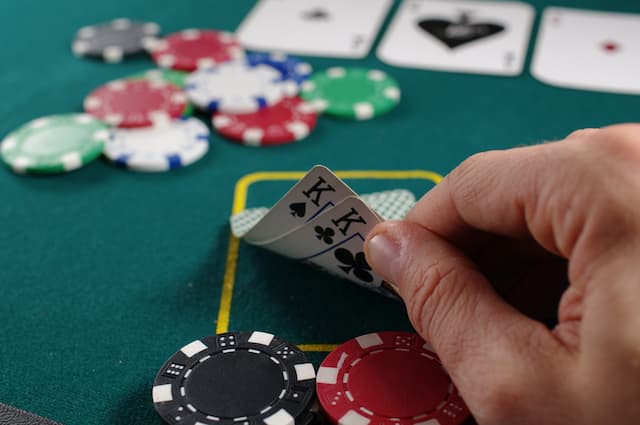
Defining the Flow-State Fold
The concept of the flow-state fold is simple but powerful: it’s a fold made not because you logically computed equities and ranges, but because your body-mind system recognized a distortion in the moment and acted before your “mental computer” caught up. In short—you became the table’s whisperer.
Typical poker training focuses on value-bets, bluffs, and balance. But almost no one studies folding as a timing skill. The flow-state fold occurs when three conditions align:
- You’re in flow—calm, present, and observant.
- The rhythm of play signals an exit, not engagement.
- You fold first instead of calling and regretting.
It’s rare because most players chase action. They see folding as passive, not powerful. But pros know: sometimes the biggest win is the pot you don’t play.
Why It Works in November 2025’s Meta
Poker’s current meta worships solvers. Everyone studies range trees, runs simulations, and memorizes outputs. Yet that focus on precision makes many players mechanical, always reacting to math instead of momentum.
That’s where the flow-state fold slips in. It’s the counterweight to rigidity. While others are following equilibrium play, you’re feeling tempo. You’re reading rhythm, not charts. You’re folding before danger even materializes.
Recent research into multi-player solver dynamics confirms what intuition already knows: pure GTO isn’t enough anymore. You must exploit. You must sense. The flow-state fold is the bridge between human instinct and mathematical discipline.
The Three Hidden Signals
Signal A: The Micro-Pulse of Opponent Behavior
Every table has patterns. One player always bets small on turns, another suddenly shifts sizing or timing. When that pulse changes, something’s off. Recognize it, and fold before the hand turns toxic.
Signal B: Your Internal Table Timer
You subconsciously track tempo—hands per hour, pot rhythm, chip movement. When the pace distorts—too fast, too still—that’s your cue. Fold, reset, and wait for the rhythm to normalize.
Signal C: Emotional Drift
Even winners fade in focus. Maybe you’re ahead, maybe you’re bored. That mild drift slows decisions just enough to leak chips. The flow-state fold stops that leak before it grows.
Training the Flow-State Fold
You can’t study this in solvers. You train it through attention.
- Warm-Up Session (30 mins) – Mark every hand where you felt you should fold but didn’t. No judgment, only awareness.
- Signal Logging (next 100 hands) – Track the three hidden signals. If two or more appear, fold—even if logic disagrees.
- Review & Reflect – Study what those folds saved.
- Simulated Freeze-Frame – Replay past hands, pause before key decisions, and ask: “Is the rhythm right?”
- Weekly Adjust – Track progress, recalibrate, repeat.
Where to Practice It—and Why It Works Best There
If you want to experience this concept in action, play where rhythms are real and players are unpredictable. Loose, unbalanced tables are the perfect training ground for the flow-state fold, because you’ll encounter chaos often enough to feel when flow breaks.
That’s why many pros and high-volume grinders are playing with the help of agents on club-poker apps. The platform connects players to active private games—especially in communities where opponents play far too loose. It’s the ideal environment to apply flow-based folding: you’ll spot more rhythm breaks per session, and your fold discipline will compound faster than anywhere else.
Remember, every chaotic player gives you the chance to test calm against noise—and that’s where the flow-state fold prints money quietly.
Monetizing the Fold
- Reduced Bleed: Every early exit saves equity. Over thousands of hands, those “small” folds form the difference between breakeven and profit.
- Sharper Table Image: Folding intelligently signals discipline. When you do engage, your range appears stronger. Opponents back off.
- Stack Preservation: Staying deep lets you attack when rhythm resets.
- Meta-Edge: While others chase, you conserve—and strike when tempo returns.
Example in Motion
You’re playing six-max online. The player on your left opens larger than usual after a limp. The tempo feels strange. Your hand is A♣ 8♣. Logic says raise, but instinct says no. You fold. The flop brings A-K-8, and the raiser later shows A-K. The chat explodes. You stay quiet, stack intact. That’s the flow-state fold at work—saving without fanfare.
Common Pitfalls
- Don’t turn this into blanket passivity. Context matters.
- Don’t mistake emotion for intuition—check your signals.
- Don’t replace study with superstition. The flow-state fold complements theory; it doesn’t cancel it.
The Quiet Revolution
Poker has never been louder—solvers, streams, AI. But the sharpest players are learning that silence beats volume. The flow-state fold is that silence: the moment you trust rhythm over calculation.
Start now. Observe, breathe, and let your instincts catch tempo. Play where the action’s wild—like the private games and turn chaos into clarity. The next time your stack feels steady and your gut whispers not this one, listen. That’s not fear. That’s mastery.
-
Comfort
-
Tournament Structures
-
Personnel


